
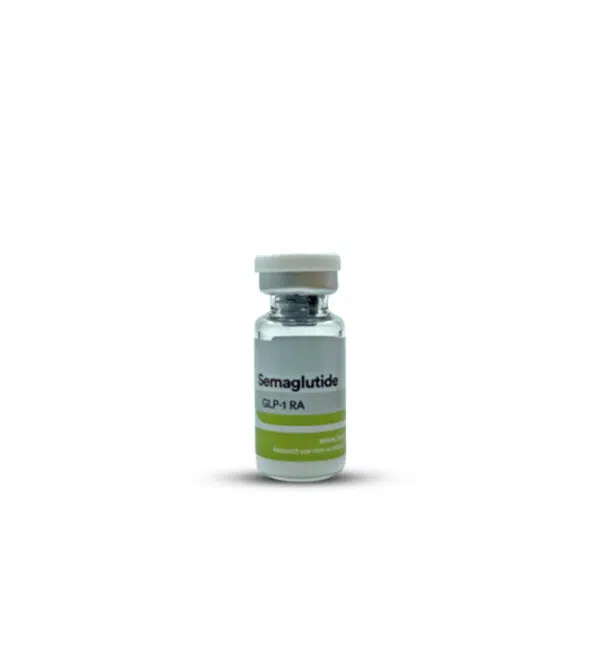
Semaglutide 5mg Research Product: Complete Scientific Overview
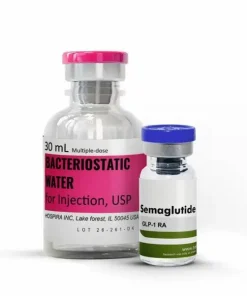
Order semaglutide 5mg vial. Semaglutide is a long-acting GLP-1 receptor agonist originally developed for type 2 diabetes and now widely researched for its effects on weight management, metabolic health, and neuroprotection.
What Is Semaglutide?
Semaglutide is a synthetic analog of human glucagon-like peptide-1 (GLP-1) with structural modifications that extend its half-life and enhance receptor binding affinity. Order semaglutide 5mg vial
Key Product Identifiers
| Parameter | Details |
|---|---|
| Common Names | Semaglutide |
| CAS Number | 910463-68-2 |
| Molecular Formula | C₁₈₇H₂₉₁N₄₅O₅₉ |
| Molecular Weight | 4114 g/mol |
| Sequence | His-{Aib}-Glu-Gly-Thr-Phe-Thr-Ser-Asp-Val-Ser-Ser-Tyr-Leu-Glu-Gly-Gln-Ala-Ala-{Lys(AEEA-AEEA-γGlu-C18 diacid)}-Glu-Phe-Ile-Ala-Trp-Leu-Val-Arg-Gly-Arg-Gly |
| Structure | 31-amino-acid peptide with fatty acid side chain for albumin binding |
| Purity (Research Grade) | ≥98-99% (HPLC) |
| Storage | -20°C, lyophilized powder, protected from moisture and light |
Mechanism of Action
Semaglutide acts as a selective, competitive GLP-1 receptor agonist with an EC50 of 6.2 pM, demonstrating potent receptor binding affinity. Order semaglutide 5mg vial
-
Insulin Secretion: Stimulates glucose-dependent insulin release from pancreatic β-cells
-
Glucagon Suppression: Inhibits glucagon secretion from pancreatic α-cells
-
Gastric Emptying: Delays gastric emptying, promoting satiety
-
Appetite Regulation: Reduces appetite through central GLP-1 receptor activation
-
Mitochondrial Function: Regulates mitochondrial function and lipid metabolism
-
Cellular Protection: Enhances autophagy and suppresses oxidative stress and apoptosis
The Aib (2-aminoisobutyric acid) residue at position 2 and the fatty acid side chain (C18 diacid conjugated via γGlu-AEEA-AEEA linkers) enable resistance to DPP-4 degradation and reversible albumin binding, extending the peptide’s half-life.
Product Specifications: 5mg Format
Standard Product Content
Research-grade semaglutide is typically supplied as a lyophilized (freeze-dried) powder in vials containing 5mg of the peptide.
| Specification | Standard Requirement |
|---|---|
| Form | White to off-white lyophilized powder |
| Purity | ≥98% (HPLC) |
| Vial Content | 5mg peptide per vial |
| Storage | -20°C, sealed, desiccated, protected from light |
| Shelf Life | 3 years when properly stored at -20°C |
| Grade | Research use only; not for human consumption |
Reconstitution Information
Semaglutide is insoluble in water under standard conditions, but can be dissolved in:
| Solvent | Solubility | Notes |
|---|---|---|
| 0.1M NaOH | 41 mg/mL (10 mM) | Requires pH adjustment; sonication recommended |
| 0.01M HCl | 41 mg/mL (10 mM) | pH adjustment to acidic range |
| DMSO | 50 mg/mL (12 mM) | Slightly soluble; sonication recommended |
| Water (neutral pH) | Insoluble | Requires pH adjustment to ≤1 or ≥14 |
Reconstitution Method:
-
Allow the vial to reach room temperature
-
Add calculated volume of appropriate solvent (e.g., 0.1M NaOH) to achieve desired concentration
-
Sonicate gently until completely dissolved
-
Aliquot and store at -80°C for long-term stability
How Many Doses in a 5mg Vial?
A 5mg vial contains enough peptide for multiple research doses, depending on the experimental design. For reference, clinical dosing schedules are as follows:
FDA-Approved Dosing Schedules
| Brand Name | Indication | Starting Dose | Maintenance Dose | Schedule |
|---|---|---|---|---|
| Ozempic | Type 2 Diabetes | 0.25 mg weekly (4 weeks) | 0.5 mg or 1 mg weekly | Once weekly |
| Wegovy | Weight Management | 0.25 mg weekly (4 weeks) | 1.7 mg or 2.4 mg weekly | Once weekly |
| Rybelsus | Type 2 Diabetes | 3 mg daily (30 days) | 7 mg or 14 mg daily | Once daily |
Vial Yield Examples
-
0.25 mg/week dose: 20 weekly injections from one 5mg vial
-
0.5 mg/week dose: 10 weekly injections
-
1 mg/week dose: 5 weekly injections
Research Applications
Semaglutide has been investigated across a broad range of preclinical and clinical research areas:
Metabolic Research
-
Type 2 Diabetes: Potent hypoglycemic effects through GLP-1 receptor activation
-
Obesity: Dose-dependent weight reduction; in DIO mouse models, 100 nmol/kg resulted in 22% body weight decrease from 43.6g to 34.8g
-
Metabolic Dysfunction-Associated Steatotic Liver Disease (MASLD): Regulation of lipid metabolism
Cardiovascular Research
In doxorubicin-induced cardiac toxicity models, semaglutide (12 μg/kg/day, 6 weeks) demonstrated:
-
Significant improvement in cardiac function
-
Reduced myocardial injury markers
-
Increased survival rates
-
Inhibition of oxidative stress and mitochondrial dysfunction
Neurodegenerative Disease Research
Semaglutide has shown neuroprotective effects in:
-
Parkinson’s Disease: In 6-OHDA-induced rat models, 25 nmol/kg semaglutide significantly improved neurological damage
-
Potential mechanisms: Suppression of oxidative stress, enhanced autophagy, regulation of mitochondrial function
Cancer Research
GLP-1 receptor pathways are being investigated for their role in cancer metabolism and cell proliferation.
Storage and Stability
Lyophilized Powder
-
Temperature: -20°C ± 5°C
-
Conditions: Sealed, desiccated, protected from light
-
Stability: Up to 3 years when properly stored
Reconstituted Solution
-
Short-term: -80°C for up to 1 year
-
Avoid freeze-thaw cycles to prevent peptide degradation
Quality Considerations
Research-Grade Quality Standards
Premium semaglutide research products should include:
-
HPLC purity analysis (≥98-99%)
-
Mass spectrometry verification of molecular weight (~4114 Da)
-
Third-party laboratory testing documentation
Manufacturing Standards
Products manufactured under:
-
GMP (Good Manufacturing Practice) guidelines
-
ISO 9001 certification
Research Dosage Guidance
Preclinical studies have utilized semaglutide across a range of dosages:
| Research Model | Dosage | Route | Citation |
|---|---|---|---|
| DIO Mouse (obesity) | 1, 3, 10, 30, 100 nmol/kg | Subcutaneous | |
| Cardiac Toxicity (mouse) | 12 μg/kg/day (6 weeks) | Subcutaneous | |
| Parkinson’s Disease (rat) | 25 nmol/kg (every 2 days, 31 days) | Intraperitoneal | |
| In vitro cell studies | 1-100 nM | Cell culture |
Switching from Other GLP-1 Agonists
For researchers modeling transitions between GLP-1 therapies, a conservative approach is recommended when switching from liraglutide (Saxenda®) to semaglutide:
| Current Liraglutide Dose | Suggested Semaglutide, Starting Dose |
|---|---|
| 0.6 mg/day | 0.25 mg/week |
| 1.2 mg/day | 0.25 mg/week |
| 1.8 mg/day | 0.25 or 0.5 mg/week |
| 2.4 mg/day | 0.25 or 0.5 mg/week |
| 3.0 mg/day | 0.5 mg/week |
No washout period is required; semaglutide can be started the day after stopping liraglutide.
Summary of Key Research Applications
| Application Area | Key Findings | Citation |
|---|---|---|
| Type 2 Diabetes | Potent glycemic control via GLP-1R activation | |
| Obesity | Dose-dependent weight reduction; 22% loss in mouse models | |
| Cardiovascular | Improved function; reduced injury markers; increased survival | |
| Neurodegenerative | Neuroprotection in Parkinson’s models | |
| Liver/Metabolic | Regulation of lipid metabolism in MASLD | |
| Mitochondrial Function | Repairs dysfunction; reduces oxidative stress |
| Vials | 1 Vial, 2 Vials (& syringes)., 5 Vials (& syringes)., 10 Vials (& syringes). |
|---|
Be the first to review “Semaglutide 5mg (generic for Ozempic)”
Related products

PEPTIDES HEALTH AND WELLNESS
PEPTIDES HEALTH AND WELLNESS
PEPTIDES HEALTH AND WELLNESS
PEPTIDES HEALTH AND WELLNESS
PEPTIDES HEALTH AND WELLNESS
PEPTIDES HEALTH AND WELLNESS
PEPTIDES HEALTH AND WELLNESS
PEPTIDES HEALTH AND WELLNESS
Reviews
There are no reviews yet.