
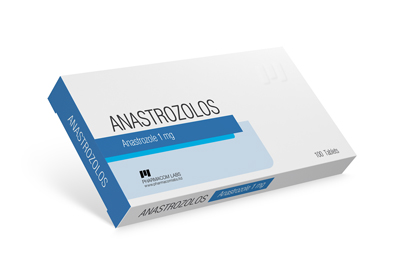
ANASTROZOLOS 1mg


$70.00
Anastrozole belongs to a class of medications called nonsteroidal aromatase inhibitors. It works by blocking the aromatase enzyme, which is responsible for converting androgens (like testosterone) into estrogens (estrone and estradiol).
In postmenopausal women, peripheral tissues (such as fat, muscle, and liver) are the primary source of estrogen. By inhibiting aromatase in these tissues, anastrozole significantly reduces circulating estrogen levels.
Anastrozole: The Definitive Guide
Adjuvant breast cancer treatment, Anastrozole is a potent, nonsteroidal aromatase inhibitor used primarily for the treatment of hormone receptor-positive breast cancer in postmenopausal women. Discovered in the 1990s and approved by the FDA in 1995, it remains a cornerstone of endocrine therapy.
Key Product Identifiers
| Parameter | Details |
|---|---|
| Common Names | Anastrozole, Arimidex® (brand name) |
| Synonyms | Anastrol, ICID 1033, ZD 1033 |
| CAS Number | 120511-73-1 |
| Molecular Formula | C17H19N5 |
| Molecular Weight | 293.37 g/mol |
| Class | Nonsteroidal aromatase inhibitor |
| Mechanism | Inhibits aromatase enzyme, blocking estrogen synthesis |
| IC50 (Aromatase) | ~15 nM (human placental) |
What Is Anastrozole?
Anastrozole belongs to a class of medications called nonsteroidal aromatase inhibitors. It works by blocking the aromatase enzyme, which is responsible for converting androgens (like testosterone) into estrogens (estrone and estradiol). In postmenopausal women, peripheral tissues (such as fat, muscle, and liver) are the primary source of estrogen. By inhibiting aromatase in these tissues, anastrozole significantly reduces circulating estrogen levels.
This is critical for treating hormone receptor-positive breast cancer, as these cancer cells require estrogen to grow and proliferate. Anastrozole has a high degree of selectivity for aromatase and, unlike older therapies, has minimal effect on adrenal glucocorticoid or mineralocorticoid synthesis. Adjuvant breast cancer treatment
FDA-Approved Indications
Anastrozole is indicated for the treatment of breast cancer in postmenopausal women:
-
Adjuvant Treatment: For hormone receptor-positive early breast cancer (often following surgery or radiation).
-
First-Line Treatment: For locally advanced or metastatic breast cancer that is hormone receptor-positive or receptor-unknown.
-
Advanced Breast Cancer: For disease that has progressed following tamoxifen therapy. Patients with estrogen receptor-negative disease rarely respond.
Standard Dosing
| Parameter | Details |
|---|---|
| Standard Dose | One 1 mg tablet taken once daily |
| Administration | Oral, with or without food |
| Treatment Duration | Typically 5 years for adjuvant treatment |
How Anastrozole Works
Mechanism of Action
Anastrozole works by selectively inhibiting aromatase, the enzyme that catalyzes the conversion of androgens to estrogens. In postmenopausal women, this prevents the production of estrogen in peripheral tissues.
Potency: Anastrozole is potent, inhibiting human placental aromatase with an IC50 of approximately 15 nM.
Additional Research Insights
Recent research reveals additional mechanisms beyond estrogen suppression. Studies have identified a genetic variant in the CSMD1 gene associated with improved response to anastrozole. Furthermore, findings suggest that anastrozole can degrade estrogen receptor α (ERα), particularly in the presence of estradiol. This has led to the hypothesis that anastrozole plus estradiol may be a potential therapeutic strategy for patients with AI-resistant breast cancer.
Common Side Effects
The most common side effects (incidence ≥10%) include:
| Side Effect | Category |
|---|---|
| Hot flashes | Very common |
| Asthenia (weakness) | Very common |
| Arthralgia/Arthritis (joint pain) | Very common |
| Nausea/Vomiting | Very common |
| Headache | Very common |
| Osteoporosis/Fractures | Very common (risk increases) |
| Depression | Common |
| Insomnia | Common |
| Hypertension | Common |
| Peripheral edema (swelling) | Common |
Important Warnings and Precautions
-
Ischemic Heart Disease: An increased incidence of ischemic cardiovascular events has been observed in women with pre-existing heart disease compared to tamoxifen users. The risks and benefits should be carefully considered in this population.
-
Bone Health: Anastrozole decreases bone mineral density, increasing the risk of osteoporosis and fractures. Consider bone mineral density monitoring.
-
Cholesterol: It may cause increases in total cholesterol. Monitor lipid levels.
-
Embryo-Fetal Toxicity: Anastrozole may cause fetal harm. It is contraindicated in pregnant women. Women of reproductive potential should use effective contraception.
-
Drug Interactions:
-
Do not use with tamoxifen: No additional benefit is seen, and combination may reduce efficacy.
-
Estrogen-containing products: May diminish the activity of anastrozole.
-
Metabolism: Anastrozole is metabolized by the CYP450 system and is a strong inhibitor of CYP2A6 and a moderate inhibitor of CYP2C19.
-
Research Applications
Pharmacogenomics
Genome-wide association studies have identified a SNP in the CSMD1 gene that may help predict patient response to anastrozole, suggesting a genetic component to its efficacy.
Research-Grade Format
Anastrozole is available as a research chemical for laboratory studies.
| Supplier | Catalog No. | Format | Application |
|---|---|---|---|
| GlpBio | GC10256 | 10mg, 50mg, 200mg, 500mg; 10mM in DMSO | Research use only |
| RayBiotech | RAY-331-20202-4 | Various | Laboratory research |
Be the first to review “ANASTROZOLOS 1mg”
Related products

PEPTIDES HEALTH AND WELLNESS

PEPTIDES HEALTH AND WELLNESS

PEPTIDES HEALTH AND WELLNESS

PEPTIDES HEALTH AND WELLNESS

PEPTIDES HEALTH AND WELLNESS

PEPTIDES HEALTH AND WELLNESS

PEPTIDES HEALTH AND WELLNESS

PEPTIDES HEALTH AND WELLNESS
Reviews
There are no reviews yet.