
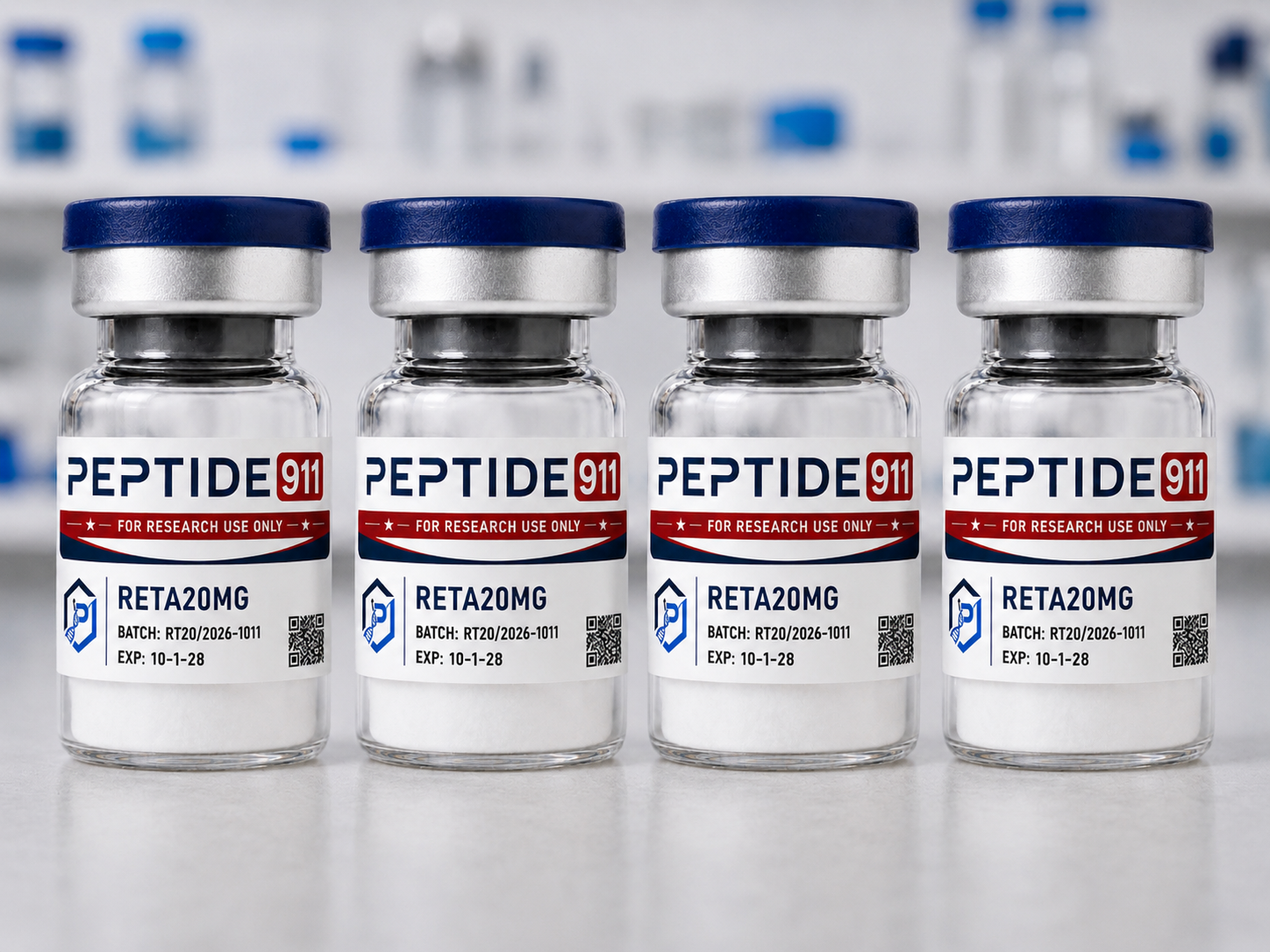
Retatrutide (GLP-3) 20mg Research Peptide
A Next-Generation Triple Receptor Agonist for Metabolic Research
GLP3-Reta 20mg, Retatrutide (research code LY3437943) is an investigational synthetic peptide currently in Phase 3 clinical trials, developed by Eli Lilly and Company as a potential therapy for obesity and metabolic disorders.
It is sometimes referred to informally as GLP-3 or Reta in research and online communities, though it is important to note that this is not a scientific or regulatory term—humans produce GLP-1 and GLP-2, but there is no natural GLP-3 hormone.
This peptide represents the third generation in a line of incretin-based metabolic research compounds:
-
First Generation: Single GLP-1 receptor agonists (e.g., semaglutide)
-
Second Generation: Dual GLP-1/GIP receptor agonists (e.g., tirzepatide)
-
Third Generation: Triple receptor agonists targeting GLP-1, GIP, and glucagon receptors simultaneously GLP3-Reta 20mg
The addition of glucagon receptor agonism distinguishes retatrutide from earlier compounds, as it may increase energy expenditure and promote lipid metabolism in addition to appetite suppression.
Mechanism of Action: Triple Receptor Agonism
Retatrutide functions as a triple receptor agonist, activating three distinct metabolic pathways:
| Receptor | Physiological Role | Research Context |
|---|---|---|
| GLP-1 | Appetite suppression, slows gastric emptying, improves glycemic control | Well-established target for obesity and diabetes research |
| GIP | Enhances insulin secretion in response to meals, supports metabolic effects | Complements GLP-1 action in metabolic regulation |
| Glucagon | Increases energy expenditure, promotes lipid oxidation, may reduce liver fat and visceral adipose tissue | Distinctive mechanism distinguishing retatrutide from earlier compounds |
By combining these three pathways, retatrutide aims to reduce food intake, improve metabolic control, and increase calorie burning—potentially offering a multi-targeted approach to metabolic research.
Key Research Findings GLP3-Reta 20mg
Retatrutide has been evaluated in Phase 2 and Phase 3 clinical trials, with notable findings:
-
Weight Reduction: Phase 2 trial (48 weeks) at 12 mg dose reported a mean weight reduction of 24.2%. Phase 3 TRIUMPH-4 data (December 2025 topline) reported a mean 28.7% body-weight loss (~71 lbs) over 68 weeks at the 12 mg dose.
-
Liver Fat Reduction: A Phase 2 substudy reported 82% liver-fat reduction at 24 weeks at higher doses.
-
Type 2 Diabetes Research: In participants with type 2 diabetes, retatrutide lowered HbA1c by 1.7% to 2.0% across all doses at 40 weeks in the TRANSCEND-T2D-1 trial.
-
Muscle Loss Considerations: Published body composition data from a Lancet Diabetes & Endocrinology sub-study indicated that participants on retatrutide lost approximately 37–40% of total weight as lean mass—comparable to other GLP-1 class compounds, not “muscle sparing” as sometimes claimed in online discussions. GLP3-Reta 20mg
Product Specifications
| Parameter | Details |
|---|---|
| Quantity | 20 mg per vial (as specified) |
| Form | Lyophilized powder |
| Research Code | LY3437943 |
| Mechanism | GLP-1/GIP/Glucagon triple receptor agonist |
Quality and Regulatory Information
-
Research-Grade: This product is manufactured for laboratory research purposes only and is not approved for human consumption.
-
Not FDA-Approved: Retatrutide is currently an investigational drug in Phase 3 clinical trials. The earliest realistic FDA approval timeline is estimated for 2027, contingent on completion of the full Phase 3 program.
-
Legal Status: The FDA has issued warning letters regarding compounded retatrutide products, stating they are unapproved new drugs and not eligible for compounding under current exemptions.
-
Vendor Awareness: Products sold online as “retatrutide peptide” or “GLP-3” are unregulated research chemicals. The only legitimate access to retatrutide outside of research is enrollment in an Eli Lilly-sponsored clinical trial.
Critical Safety and Regulatory Notice
Retatrutide is not FDA-approved. It is an investigational drug in Phase 3 clinical trials and is not legally available for prescription or purchase for human use outside of clinical trials.
Risks of Unregulated “Research Peptide” Products
-
Unknown Identity and Purity: Products sold online may be counterfeit, mislabeled, substituted with a different substance, or contain inert powder.
-
Contamination Risk: Research peptides may contain bacteria, endotoxins, or dangerous particulates from non-sterile manufacturing conditions.
-
Dosing Inconsistencies: The formulation, strength, and potency of online products may vary widely from clinical trial protocols.
-
Side Effect Profile: Published clinical data reports gastrointestinal side effects (nausea, diarrhea, vomiting) as the most common, occurring primarily during dose escalation.
-
A notable adverse effect, dysesthesia (abnormal skin sensations such as tingling or burning), was reported in up to 21% of participants on the 12 mg dose in TRIUMPH-4, compared to approximately 0.7% on placebo—a finding regulators are carefully scrutinizing. Dose-dependent increases in heart rate have also been observed.
Be the first to review “GLP3-Reta 20mg – Bundle of 4”
Related products
PEPTIDES HEALTH AND WELLNESS
PEPTIDES HEALTH AND WELLNESS

PEPTIDES HEALTH AND WELLNESS
PEPTIDES HEALTH AND WELLNESS
PEPTIDES HEALTH AND WELLNESS
PEPTIDES HEALTH AND WELLNESS
PEPTIDES HEALTH AND WELLNESS

PEPTIDES HEALTH AND WELLNESS
Reviews
There are no reviews yet.